Acupressure.ca

A practitioner's guide to pressure point therapy for Canadians — grounded in research, written without the wellness marketing.

Acupressure is one of those practices that sits in an uncomfortable middle ground: too mainstream to ignore, too old to be trendy, and just supported enough by research that dismissing it outright feels intellectually dishonest. It's been practiced across East Asia for over 2,000 years, but Canadian interest has grown steadily since the early 2010s, particularly among people managing chronic pain who've run out of patience with prescription options.

This guide is not trying to sell you on anything mystical. What acupressure actually is — stripped of the qi talk for a moment — is the application of focused manual pressure to specific anatomical points that correspond to nerve-rich areas, fascia junctions, and trigger zones that respond to mechanical stimulation. Whether that's "unblocking meridians" or "activating mechanoreceptors that modulate pain signalling through the gate control mechanism" depends on who's explaining it. Both groups often mean the same intervention.

How It Differs From Acupuncture (and Why It Matters)

The most common question: isn't this just acupuncture without the needles? Sort of, but not really. Acupuncture uses fine needles to penetrate the skin, activating a different (and deeper) physiological response — it's an invasive procedure that requires trained practitioners and sterile conditions. Acupressure uses finger pressure, knuckles, or tools like acupressure mats and balls. You can do it at home, on the subway, or sitting at your desk in Mississauga without anyone noticing.

The research bases are also separate. A 2016 systematic review by Suen and colleagues in Evidence-Based Complementary and Alternative Medicine found that acupressure showed modest but consistent effects on self-reported pain, particularly for dysmenorrhoea and lower back pain, with a different effect profile than acupuncture on the same points. The needle doesn't simply make acupuncture "stronger" — it changes the mechanism.

What the Evidence Actually Shows

Acupressure research has improved significantly in quality over the past decade, though many trials still suffer from small sample sizes and difficulty blinding participants. Here's an honest accounting:

The Big Four: Techniques Worth Knowing

For Headaches — LI 4 (Hegu)

Found in the webbing between your thumb and index finger, on the back of the hand. Press firmly with the opposite thumb, angled toward the index finger bone. Hold for 30–60 seconds. What surprised us when researching this site is how consistently this point comes up across cultures — Ayurvedic, TCM, and even some Western osteopathic literature reference the same anatomical location for headache relief. It's not just coincidence; there's clearly something neurologically interesting in that spot.

For Back Pain — BL 40 (Weizhong)

The centre of the back of the knee. Can be stimulated while seated — reach down and press with two fingers into the crease. Especially useful for acute low back spasms. This one seems to work through referred sensation pathways rather than local tissue effects.

For Anxiety — PC 6 (Neiguan)

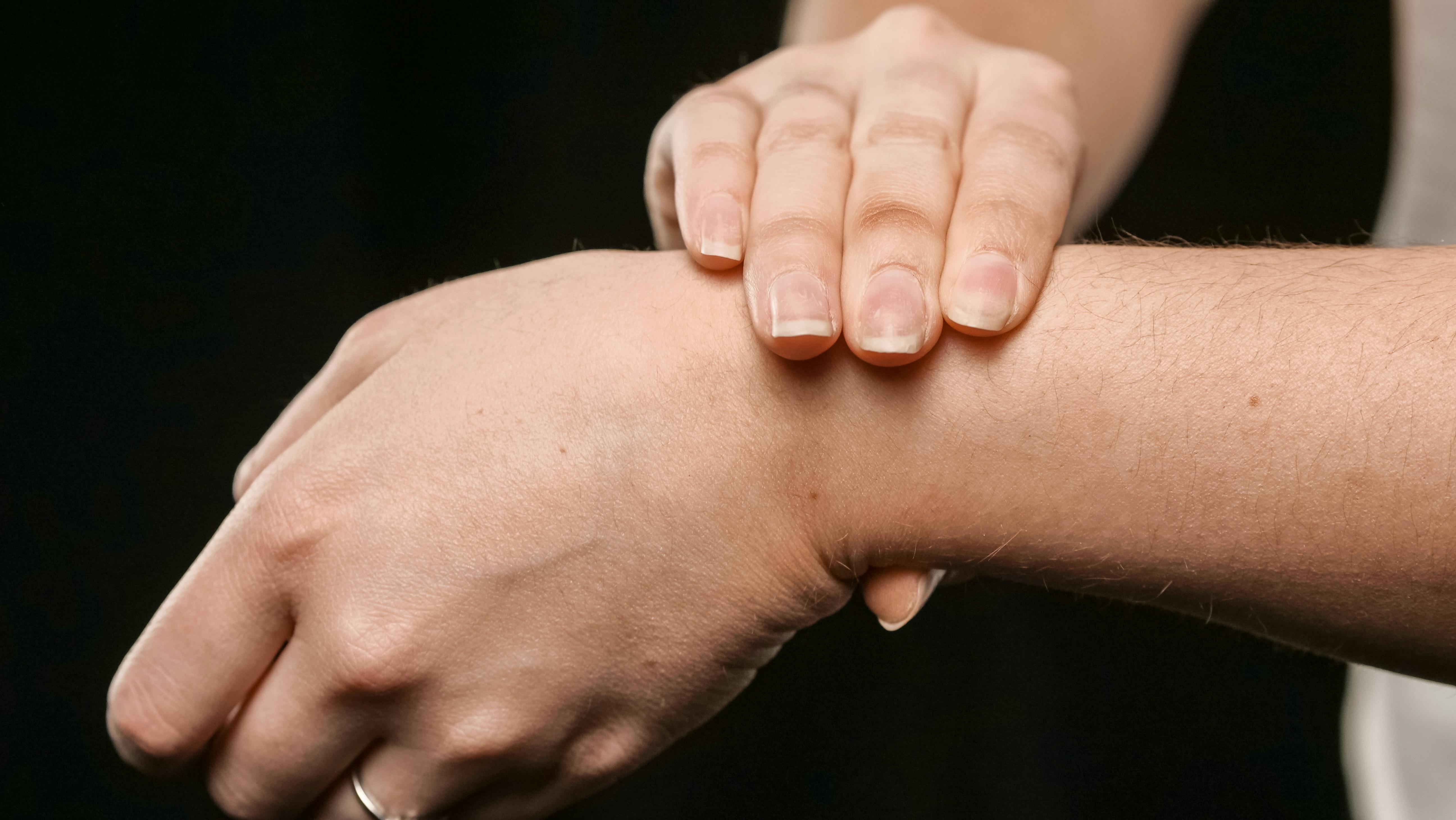
Three finger-widths above the wrist crease, between the two central tendons of the forearm. This is the nausea and anxiety point. Apply moderate pressure for 1–2 minutes. Works for travel nausea, which makes it particularly useful for anyone flying out of Pearson in January with a stomach full of airport food.

For Sleep — HT 7 (Shenmen)

On the wrist crease, at the ulnar side (pinky side). Small hollow just inside the pisiform bone. Light, sustained pressure before bed — not forceful. A few studies in insomniac populations have shown reduced sleep onset time, though the studies are almost all in elderly hospital patients, which limits generalizability.

Acupressure Mats — Do They Work?

Acupressure mats (also called Shakti mats, Yantra mats, or spike mats) have become popular in Canada over the past few years. They're covered in hundreds of small plastic spikes that stimulate broad areas of the back, neck, or feet simultaneously. The experience ranges from "warm and tingly" to "genuinely unpleasant for the first minute" — most users report the discomfort fades after 5–10 minutes and is followed by a notable release of muscle tension.

The mechanism is likely cutaneous mechanoreceptor activation and endorphin release from the widespread skin stimulation. A small 2012 study in the Evidence-Based Complementary and Alternative Medicine journal found acupressure mat use reduced perceived back pain and improved sleep quality in participants with chronic lower back pain. The evidence base for mats specifically is thinner than for manual point acupressure, but the reported experiences of Canadian users are consistently positive for back tension and relaxation.

Top-Rated Acupressure Mats on Amazon.ca

We've reviewed several mats available to Canadian buyers — see our full comparison guide for honest assessments including what we liked and didn't like about each.

Browse Acupressure Mats →

Safety and Who Should Avoid It

Acupressure is generally low-risk for healthy adults, but there are real contraindications that get glossed over in wellness content:

Canadian context: Many naturopathic doctors (NDs) registered with CAND and traditional Chinese medicine practitioners (TCMPs) registered with CTCMA (in BC) or CAOM (nationally) offer acupressure as part of their practice. If self-application isn't giving you results, a session with a registered practitioner is worth trying before giving up on the modality entirely.

Getting Started

The simplest entry point is to pick one problem — back tension, frequent headaches, difficulty sleeping — and focus on the one or two points most relevant to it for two weeks. Daily, consistent stimulation (3–5 minutes per point) produces better results than sporadic intensive sessions. A basic acupressure mat can add passive point stimulation while you're lying down watching TV, which removes the effort barrier entirely.

The back pain guide, headache guide, and anxiety guide each go deeper into the specific points, how to locate them accurately, and what the research says about each application. And if you're considering a mat, the comparison page covers what's actually available in Canada.